
Home » Aqua-fil
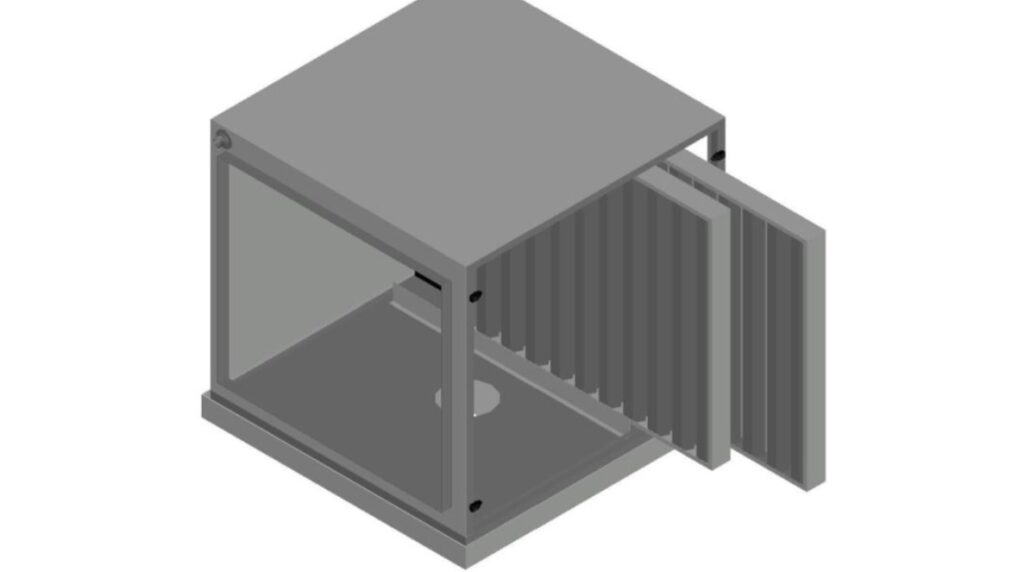
Lorem ipsum dolor sit amet, consectetur adipiscing elit. Ut elit tellus, luctus nec ullamcorper mattis, pulvinar dapibus leo.

AQUA-FILTER AF1500 & AF3000 — TECHNICAL DATA SHEET
Wet Scrubber / Flame Arrester for cooling down and filtration of kitchen smoke, and retaining steam in Pizza ovens (Gas and Electric operated), Charcoal Grills, Barbecue, etc.
Construction Detail:
The wet-scrubber is completely made from stainless steel (SS-304) and incorporates several water nozzles, along with two baffle type filters to retain water droplets, ensure correct filtering of grease, efficient protection against fire, and a considerable reduction in the temperature of the fumes.
You can reach the inside from either side to clean or replace filters. The nozzles create an adjustable stream which sweeps across the entire area the gases cross. These nozzles can be removed for cleaning and have their own inner filter to remove impurities from the water. The spray manages to achieve maximum effect from a minimum amount of water.
The case’s special design reduces condensation on the outside to the minimum, and ensures that dripping is minimal. A control box including a manometer, a pressure reducing valve, and an electrically operated solenoid valve will keep the unit working whenever the fan is running and will help in getting the right water pressure at the nozzles.
Operating Principles:
Water is sprayed in fine droplets to achieve five fundamental effects:
- To create jets of water to sweep away drops of grease and other air-born solid particles, to the collector tray.
- Even when there is no sweeping effect, the drops of grease grow on contact with the water droplets and are caught more easily in the filters.
- Condensation of grease and oil which go from a gaseous to a liquid state as a consequence of the sprayed water’s undergoing an adiabatic change of state.
- Dissolution of soluble compounds, principally aromatic compounds, in the drops which will later be trapped by the filters.
- Extinguishing sparks.
Technical Data:
Description | Unit | Model: AF 1500 | Model: AF 3000 |
Water Connection Control Cabinet | — | ½” Pipeline | ½” Pipeline |
Water Connection Aquafil (IN/OUT) | — | ½ inch / 1 inch | ½ inch / 1 inch |
Weight | Kg | 53 | 106 |
Unit Width | mm | 655 | 1270 |
Unit Depth | mm | 670 | 670 |
Unit Height | mm | 640 | 640 |
Max. water pressure | bar | 15 | 15 |
Recommended operating pressure at nozzles | bar | 2 (max.) | 2 (max.) |
Water Consumption @ (2 bar) | l/min | 0.78 | 1.56 |
Temperature with Control Valve | °C | 0-60 | 0-60 |
Application:
High temperature cookers, rotisseries, roasting tins, cookers, and stoves. For lowering temperature, filtering grease, fire prevention, and as a complement to purifying fumes and smells.
How Water Spraying Affects the Temperature:
The first effect we achieve by spraying water is to increase the contact area between water and air. To understand this, just imagine that an amount of water is composed of drops together.
Of all those, only the upper part of those on the surface are in contact with the air. When we spray, what we do is separate them, which brings the total surface area of each drop into contact with the air.
Thanks to this effect, what we achieve is, on the one hand, to sweep a large area effectively and, on the other, facilitate the adiabatic change of state through which, with no input of heat, and without reaching its evaporation point, the water passes to a gaseous state with the consequent absorption of heat and drop in temperature.
The higher the temperature and the lower the moisture content of the fumes, the greater the drop in temperature will be. In ideal conditions, it is possible to achieve drops in temperature of tens of degrees.
Example:
If the air in the kitchen is at 20ºC and the relative humidity is 50%, and the fan is extracting the fumes from a barbecue at 75ºC, the drop in temperature would be more than 50°C, giving a final temperature of about 25ºC.
(In practice we shouldn’t expect such spectacular drops in temperature as it is difficult to achieve a complete transformation.)